May 7-8 Pauper Weekend Recap

The May 7 and May 8 are not telling us anything new about the format. Affinity, Boros, and Faeries remain the big players in Pauper and unless there’s a format update that is not likely to change. But instead of digging deep on these early results I instead want to talk about a recurring topic of conversation in the #MTGPauper Discord: play patterns.

More specifically, what play patterns are acceptable and which ones should be excised from the format.

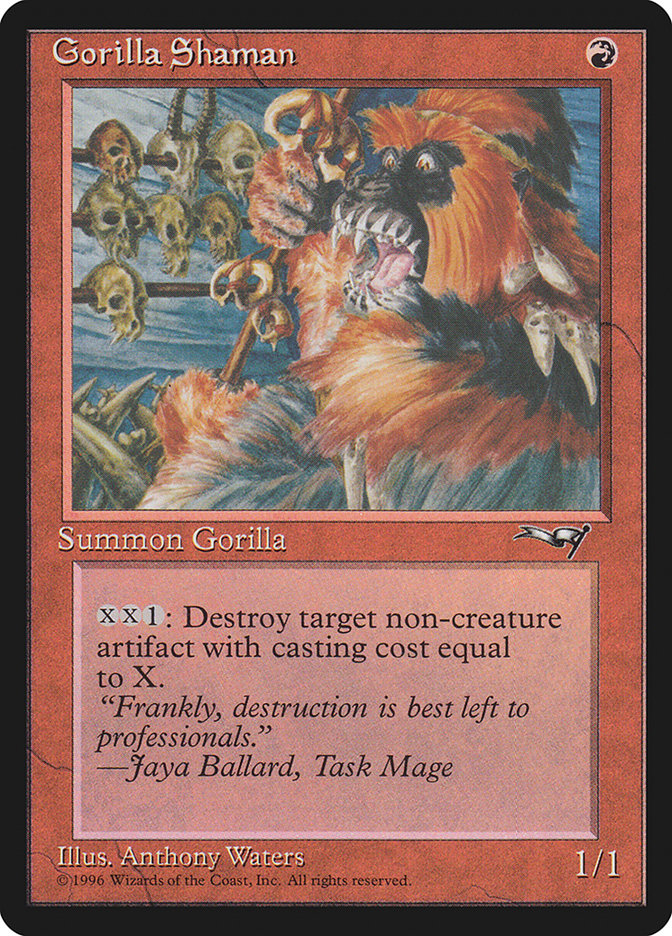
The majority of discourse these days centers around the presence of the Modern Horizons 2 Bridges and how their indestructible status fosters certain lines of play. Prior to the printing of Bridges, Affinity was a “high risk, high reward” decks where it was possible to have a significant chunk of its mana base eradicated via Gorilla Shaman. As someone who played a ton of Pauper in those days I want to be clear about one thing: Gorilla Shaman was not an automatic victory against Affinity.

Mox Monkey did a ton of work, chewing up copies of the Mirrodin artifact lands with gusto. But experienced Affinity players knew what was up and would pivot to a longer game plan where the hate-card was less effective. Sometimes it still mattered in these longer games but it was far from a slam dunk.

Instead, Gorilla Shaman and Dust to Dust both promote similar angles of attack: choke off their resources. And in both instances these cards have limited utility against other decks in their respective fields. The big difference is that you did not need to run Gorilla Shaman in your deck to have a chance against pre-Bridge Affinity and today, it at least feels like you need to have Dust to Dust to stand a chance if pitted against the current iteration. It is this feeling, coupled with Affinity’s overall strength, that has left some players unhappy with the play patterns available in Pauper.

But then again, a lot of play patterns in the format have been less than desirable. Having to play against Spellstutter Sprite can be a misery; facing off against Palace Sentinels and Prismatic Strands can leave players feeling overmatched; when someone taps Axebane Guardian for an obscene amount of mana and hits Boarding Party off Annoyed Altisaur, well, it doesn’t make me jump for joy. All of this is to say there are plenty of lines of play that feel downright depressing to play against if you are not expecting them.

So what makes the Affinity scenario different? I am not sure but I think it is a confluence of a few things. First, that Affinity was not this powerhouse a year ago and a set that changed everything led to several cards being banned also gave Pauper the Bridges. Perhaps they are seen as a mistake that still needs to be corrected.

But I don’t think that’s everything – I think the fact that the Pauper Format Panel exists has also fueled some of the discontent. Full disclosure: I sit on the panel. Because the Panel helps to manage the format and has gone after Affinity twice in an effort to rein it in (not kill the strategy outright) the fact that it continues to put up big numbers might come across as a failure.

The last big piece of this puzzle, to me at least, is that there are lots of other powerful things you can do in Pauper and very few of them have clean answers. Deadly Dispute is an absurd card; Spellstutter Sprite remains a format defining card; Azorius Familiars can take complete control of a game on the 4th turn; and so on. In all these instances there are several things that can be done but there is debate on what should be done. At least in Affinity’s case the answer seems clear: knock down the Bridges.

Speaking outside of my role on the Pauper Format Panel, I would not advocate for that at this time. The format, despite being top heavy, still has a decent amount of play to it. There is a clear top tier but no one macro-strategy is consistently dominant week after week after week. Coupled with this the format now has a suite of powerful cores that deckbuilders can use as the supporting architecture for variant builds. I am not saying the format is perfect, but it is the best it has been in a long time.

If you enjoy my more dedicated Pauper content, consider supporting my work via Patreon. Rewards start at just $1 and every little bit is appreciated!

April 30-May 1 Pauper Weekend Recap

The April 30 and May 1 Pauper Challenges were the first to feature Streets of New Capenna. A grand total of three cards – Tramway Station, Jewel Thief, and Inspiring Overseer- made it into the Top 32 decks on the weekend. It is still too early in the season to draw any conclusions, but once again, Faeries is setting the pace of the field.

But today I don’t want to talk about that. Where I live – the United States – just saw the hint of what is to come in our future. A leaked document from our Supreme Court is looking to overturn a previous decision and endanger the health and welfare of anyone who can bear children, denying them healthcare regardless of circumstance or potential harm. It has the horrible potential to turn humans with wombs into little more than just that: wombs. And if this decision comes to pass several states already have laws on the books that will make abortion illegal.

Just as worrying is the language used in this decision, which is structured as to roll back rights for marginalized groups. Rights that should be inherent but due to the structure of this country had to be won in hard fought battles.

So forgive me today for not talking too much about Pauper. Instead I encourage you to donate to an abortion fund. Organize and protect your friends and neighbors – protect other humans. And as I posted to Twitter earlier, if you’re reveling in this decision and what it means for the people of this country, I want nothing to do with you.

Normally here I’d put a plug for my Patreon. If you were going to sign up this week thank you, but donate that money to an abortion fund instead.

Neon Dynasty Season Wrap

The April 23 and April 24 closed the books on the Kamigawa: Neon Dynasty season. Seven weeks after the most recent format update Pauper is ready to turn the page to Streets of New Capenna. There are plenty of stories to tell about the past two months, but if there is one overarching theme it is one of change.

First, I think it is fair to say that there are three macro-archetypes at the top of the standings: Affinity, Boros, and Faeries. As I said earlier this week if you asked me to pick a “best” strategy it would be Faeries but I think Affinity is the one that does the most to define how the format is played currently.

It’s hard for Faeries to not be the best. It has access to the best hand sculpting in the format as well as the best answers in Counterspell and Spellstutter Sprite, and two fantastic card flow engines in Ninja of the Deep Hours and the Monarch. It can vacillate between red, black, and blue to pick the best potential supporting cast for a given weekend and its cards have a significant amount of “play” to them, that is they are not prescribed. The cards in Faeries provide you with a bounty of options and reward making the correct choices in a given moment. Compared to other decks, Faeries has additional opportunities to use the same game pieces to make hugely impactful plays.

So why do I say that Affinity does the most work to determine the field of battle? It is a collection of the most powerful cards and requires specific hate to combat. While it is somewhat less flexible than Faeries in execution of cards, it is more flexible in composition, with several possible builds all finding success on the back of the potent core of Deadly Dispute and material.

The Big Idea

If there is a narrative for this season it is that cards that generate material are much better than they look on the surface. Wire to wire, any card that could put stuff on to the board mattered in Neon Dynasty season. While this may have started with Deadly Dispute needing fodder it ended with a land destruction strategy topping their curve Imperial Oath.

If this paradigm shift persists it means taking a long hard look at any card that brings something along for the ride. Whether that’s a reemergence of Mogg War Marshal or a deeper appreciation of Wakedancer, cards that bring along friends are poised to be incredibly important.

Weirdly enough I think the color best positioned to take advantage of this potential change is green. Cards like Scion Summoner, Kozilek’s Predator, and Yavimaya Sapherd have been bringing material to bear for years before Deadly Dispute became a thing. If Casualty picks up steam in the form of Dig Up the Body then a Saproling token might be worth about as much as a Blood token, which is saying something.

Running the Streets

So what does this mean for the first days of the new season? Ignoring Faeries and Affinity seems like a mistake and cards like Dust to Dust will remain a premium inclusion, but so will cards that can effectively trade up with Faeries. We also cannot ignore the late surge in the popularity of Azorius Familiars. So if I were trying to attack this metagame, I would be trying to find a shell for Pestilence or Crypt Rats that also had redundant pieces of graveyard hate and enough life gain to buy time against Affinity.

If you enjoy my more dedicated Pauper content, consider supporting my work via Patreon. Rewards start at just $1 and every little bit is appreciated!

April 16-17 Pauper Weekend Recap

We are in the home stretch of Neon Dynasty season. There’s one more weekend of events before Streets of New Capenna his Magic Online. While the next set looks to be of a lower power level it still has within it the capacity to impact the metagame. But that’s looking to the future and this is about the here and now.

The April 16 and April 17 were something of an anomaly given the recent trends in the format. Dimir Faeries put up a middling performance while Affinity and Boros were barely a factor. Instead the big winner out of the Big Three was Izzet Faeries, which used three Top 8 finishes on Saturday to propel itself to the best weekend out of any archetype, with 16.67% of the winner’s metagame.

The other big winner on the weekend was Rakdos Blood Burn. This deck has been gaining ground over the past several weeks and it deserves some attention. Leveraging the material generated by Crimson Vow‘s Blood Mechanic, as well as Blood Tokens’ ability to discard for Madness, and you get a deck that excels at mining every ounce of value from its cards. It is reminiscent of the earliest builds of Boros Bully in that regard which would use Faithless Looting to dump Prismatic Strands into the yard to be used later. Rakdos Blood Burn is not using Looting in such a defensive matter, instead using it to stick copies of Kitchen Imp or throw Fiery Tempers at the opponent.

But what about the format at large? These two decks accounted for almost 30% of the winner’s metagame over the weekend. The real story was how the Big 3 decks of the current moment played out:

While this week saw the Big Three chew up the least amount of the winner’s metagame, Faeries came out swinging with its second best weekend this season. Out of the Big 3, Faeries accounted for nearly 70% of their top finishes – far and away Faeries biggest share of this season.

Taking a look at the above chart we can see a trend of Faeries performing somewhere between “good” and “excellent”, while the other major plays vacillate between “above average” and “great”. For all the press Affinity gets for its busted cards and Boros gets for Experimental Synthesizer, Faeries continues to be the most consistently good performer in the bunch.

Why does Faeries seemingly get away with it? Perhaps it is because Affinity has only had its new toys for a little under a year while Boros only just got Experimental Synthesizer this year. Faeries, despite arguably being better than either of these archetypes, has always been near or at the top of the metagame. It also does not do anything that appears broken, instead playing relatively fair Magic compared to some of the other nonsense in Pauper. And yet it is likely the best strategy in the format right now.

None of this is to say action needs to be taken. In fact, the format looks relatively robust and healthy (outside of Faeries one weekend spike). While it does look rather different than Pauper before Modern Horizons 2, the format still appears to be in a good spot overall. And with Streets of New Capenna around the corner ready to rough things up, I think we’re poised for an interesting, and fun, summer.

If you enjoy my more dedicated Pauper content, consider supporting my work via Patreon. Rewards start at just $1 and every little bit is appreciated!

April 9-10 Pauper Weekend Recap

The April 9 and April 10 Pauper Challenges start us on our second four week tour of the format in the wake of the latest round of bans. The Top 8s from these events were fairly diverse, with 12 different archetypes making it to the single elimination rounds – Grixis Affinity and Dimir Faeries each had three Top 8 finishes across the weekend. Even if you group macro archetypes (Affinity, Boros, Faeries), you get ten different stripes in the Top 8 on the weekend.

I think it goes without saying that the biggest three decks in the format currently are Affinity, Boros, and Faeries. While other strategies can (and do) succeed, these three are the best, and this is due in no small part to their flexibility. Affinity can run the best cards and cheap threats while Faeries can shift colors to best meet the metagame. Boros has at least five different builds that can be tailored for most fields.

This chart looks at the top strategies in Pauper and their chunk of the Winner’s Metagame, week over week. The most volatile of these appears to be Affinity, which has fairly large swings week over week. Boros tends to be somewhat more consistent, but still can get caught off guard. Faeries had a fantastic week one (which can be expected in a new metagame) but has since settled into a consistent pace. I believe that Faeries is the best deck in the format right now and is benefiting immensely from the format discourse.

Depending on where you get your information, Pauper is either in a great place or is a format where decks are trying to race past one another, not that these are mutually exclusive phenomena. However I think that there are some greater issues at play.

These three decks are all fantastic at generating card advantage while also pressing a tempo advantage (Affinity through cheating mana, Boros through producing multiple threats, Faeries through a flash game). This in turn creates a landscape where other decks struggle to fight on both these axes. The result is that a lot of the decks outside of the top tier end up being hyper-linear decks that are focused on enacting their gameplan. There are exceptions to this – Jeskai Ephmerate and Dimir Angler spring to mind – but for the most part if you venture outside the top of the metagame you are doing to see a bunch of go-karts zipping past each other. None of this is to say that interacting is a fool’s errand but rather you have to decide how you are going to interact. Given that these decks can just draw more cards than you the best way appears to be trying to play a tempo game.

So what does that all mean for this week? Considering how popular aggressive red strategies have been the past two weeks I would expect a decent amount of life gain to rear its head. But Poison counters do not care about your life total and I would be trying to find the best Infect deck to try and steal a win or seven.

If you enjoy my more dedicated Pauper content, consider supporting my work via Patreon. Rewards start at just $1 and every little bit helps!

April 2-3 Pauper Weekend Recap

Four weekends have passed since the last round of bans. There have been countless words written about the state of Pauper so today I want to take a slightly different approach. The chart I am presenting today takes into account the eight challenges and one qualifier that have taken place on Magic Online since the Pauper Format Panel’s last round of updates. It does no include the (amazing) Paupergeddon event that took place this past weekend.

This chart is broken up by the different weeks and it measures each archetype’s volume of the winner’s metagame, defined as share of wins at X-2 or better. So X-2 counts as one win, X-1 is two, and X-0 is three. It does not take Top 8 records into account – only Swiss. It also breaks up macro archetypes (Affinity, Boros, Faeries) into their sub-components.

Bold black numbers represent the deck with the largest winner’s meta share on that weekend; red numbers is the largest drop off from the week prior; green numbers represent the biggest gains (for week 4, the same deck had largest winner’s meta share and biggest gain).

Phew! With all that out of the way, let’s get to the chart!

I’m eager to see what folks think of this information, but here are some tidbits I’ve pulled from this information:

  • Outside of the first week, the best deck on any given weekend makes up about 15% of the winner’s metagame. That first week, the best deck had nearly double those numbers.
  • No micro-archetype has had back to back weekends where it was the best deck.
  • Azorius Familiars, Dimir Faeries, are Grixis Affinity are the most consistently “good” decks.
  • Boros as a macro archetype is a solid choice but rewards you for picking the best Boros build for a given weekend – just look at that drop-off for Kuldotha Boros.

Let’s talk about the macros for a moment. Here is the week over week for Affinity (Grixis, Kuldotha, Rakdos), Boros (Bully, Kuldotha, Metalcraft), and Faeries (Delver, Dimir, Izzet, Mono Blue):

This is an interesting tidbit – from week to week, the best choice changes. That indicates that the Pauper metagame is more dynamic than stagnant, meaning it trends towards change. That is a drastic change from the format in the past, where a best deck was not only clearly the best deck but tracking these shifts was a fool’s errand since some deck (whether it was Tron or Tribe or Chatterstorm) was going to be at the top of the heap.

So what can these trend lines tell us? Faeries should trend down slightly next week, as should Affinity. Boros could make a surge but that depends on whether or not people pick the right suite.

But what do you see in this data? What questions are left unanswered? What deck could be next week’s Burn?

If you like my more hardcore Pauper content, consider supporting my work via Patreon. Rewards start at just $1 and every little bit helps!

Pauper’s Problem with Material

If you think I’m going to link that song, you’d be sorely mistaken. Instead I want to take some time to talk about the dearth of good removal in Pauper.

Do I have your attention yet?

Pauper is home to some fantastic creature removal – Skred, Lightning Bolt, Cast Down, Chainer’s Edict, Snuff Out, Savage Swipe, Journey to Nowhere…the list goes on and on. Keeping creatures alive is a struggle. But as good as the creature kill is in Pauper, the non-creature removal is just as bad. The best general option is Oblivion Ring but as we will see soon, this is problematic.

One reason the creature removal is strong is because it almost always “trades up” – that is you are spending less on removing a creature than your opponent invested in bringing it to the battlefield. The issue as it stands today is that a lot of Pauper’s power and card advantage are tied up in non-creature permanents, both cards and tokens.

Let’s look at Thraben Inspector for a moment. If you kill Thraben Inspector with a Lightning Bolt you are down a card since they have the Clue. If you kill the Clue not only are you down a card but you also included a narrow answer in your deck. Fragementize and similar effects are powerful but narrow and including them in your main come at a real cost. Returning to Oblivion Ring, it is one of the cleanest answer to these material cards but it comes at such a massive cost. And all of this ignores Experimental Synthesizer. You have to carefully time removing this card otherwise you are going to be down a card as well.

Now all of this doesn’t take into account the other issue with the current surplus of material: the lands count. It does not matter how many copies of Oblivion Ring or Shenanigans you draw, you are going to struggle removing the Bridges. The fact that these lands provide redundant fodder for Deadly Dispute contributes to the issue.

So what can be down with what the format has on hand? Cards like Cathar Commando and Qasali Pridemage should be going up in value, but the sleeper might be Hearth Kami. The fact that this can pop off for free against a Clue or Treasure token, or for cheap against Synthesizer, does matter. Gorilla Shaman remains solid but lacks the general utility to find a slot in the 60. All this being said, the best answer for the current metagame might just be cards like Repeal and Into the Roil or Echoing Truth. Going that route means you need to have a powerful grasp on endgame to make up for the lack of better answers to opposing threats.

If you like my more hardcore Pauper content, consider supporting my work via Patreon. Rewards start at just $1 and every little bit helps!

March 26-27 Pauper Weekend Recap

Sorry for the delay in this one folks – a busy week at work and a wedding anniversary takes precedence over my pontificating on Pauper. And the extra few days has given me some time to reflect on this Twitter post from Monday. While I believed the format to be in a good place at the start of the week today I am less sure and it has a lot to do with this week’s League Results. But that’s getting ahead of ourselves. For reference, here are the Saturday and Sunday Challenges and here’s a chart that tracks every deck with either a Top 8 finish or at least 4 appearances in the past three weeks:

The Sunday Challenge saw a ton of combo decks make the Top 8 and it prompted me to look at the Winner’s Metagame track of archetypes over the first few weeks. What I saw was Affinity ebbing and flowing, Boros finding its feet in the Kuldotha version, and Dimir Faeries starting strong but tailing off. I hypothesized that this was promoting a dynamic metagame – the rise of Boros led to a decline in Faeries which in turn allowed an opening for Combo. And while this might still be true, the League Results have given me something to think about.

At last check the league remained relatively popular. However when fewer than 30 decks get posted to the weekly results, that tends to be the sign things are trending in a bad direction. This week 28 decks got posted and several of them fall into the same archetype (multiple Bogles, multiple Boros, multiple Jeskai Ephemerate, etc.) which could mean a few things.

First, it could simply be a blip. People saw a bunch of new decks crop up and tried them to less success than in an average week. It could also mean that a lot of people are still playing but the same decks are succeeding over and over again.

It could also mean that people saw the weekend results and decided that they’d rather not play the format for the time being.

What do I think? I believe the rules of engagement in Pauper have been shifting for some time and it is only in the most recent round of bans that the new field of battle can be properly discerned. Learning how to navigate the new paths takes time, especially when they have not been disrupted for years. If this is true it does not preclude the format from being in a bad state. I do not have an answer right now but I know I will be watching the weeks closely to see if we are entering a more dynamic phase of Pauper or if things are treading the water of stagnation.