
Last week I wrote this with the intent of turning it into a script for a video. In the intervening days I attended a professional development conference for my career and the keynote address gave me a lot to think about. Namely, writing brings me joy and I’m not sure that moving to another medium is for me. But I really like what I had to say so I’m sharing it here. If you like this, let me know; if you think this would make a good bite sized video let me know even louder. But for now, I hope you read and enjoy.
Hello everyone,
My name is Alex Ullman and this is Treasured Finds – a place where we can appreciate Commander decks that really like it when things hit the graveyard. Now you might know me better from my articles on the Pauper format and my work on the Pauper Format Panel and while I do love Pauper, I also have been an avid Commander player for more than a decade. The other day StarCityGames tweeted out a question – What is the Best Aristocrat Commander?
And I had so many opinions on the matter that I decided to make this here video.

Generally speaking an Aristocrat strategy in Commander is based around sacrificing creatures in a way that damages your opponents through cards like Zulaport Cutthroat. The name might sound odd but it comes from a Standard deck that broke out at Pro Tour Gatecrash in 2013. The deck would sacrifice creatures to Cartel Aristocrat and Falkenrath Aristocrat to leverage attacks and over time the name came to incorporate decks that would kill with Blood Artist. The name stuck even if many of the free sacrifice outlets that see play no longer bear the name.

Aristocrat strategies in Commander need three key components to function. First they need a sacrifice outlet so they can play god and dictate when and how things are going to die. Second, they need material to feed to the sacrifice outlet, for they are a vengeful god. Finally, they need a spout or a way to convert all these dying creatures into victory. Some cards, like Goblin Bombardment or Altar of Dementia, combine two pieces of the puzzle into one for the world’s goriest you got chocolate in my peanut butter moment.
Back to the question at hand – what is the best option for heading up an Aristocrat deck? The reality is it, like with so many things in Magic and growing old, depends. Just like there is no one way to play Commander there is no one real way to build an Aristocrat deck. The commander you choose is going to be heavily dependent on the kind of experience you want to have and the kind of game you want to bring to the table. To me there are four main kinds of Aristocrat Commanders and each bring their own unique spin on the archetype while also influencing deck construction. They are Spouts, Fodder, Sacrifice Engines, and Spout Engines.
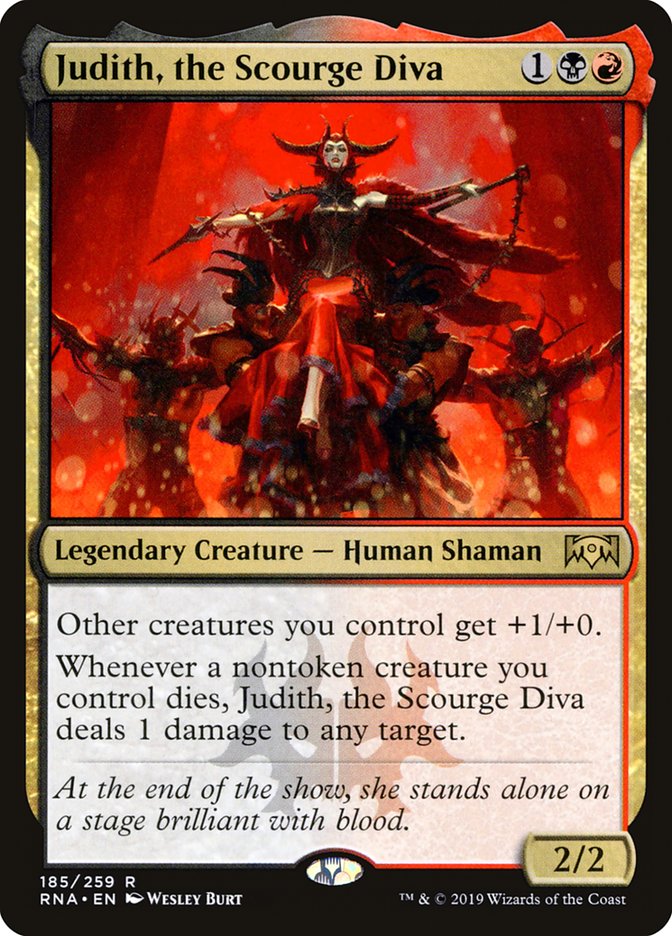
Let’s start with the most obvious – the Spouts. These are your so-called Blood Artists in the Command Zone. They are part of your primary win condition and allow you to start going to town on the table once have assembled enough fuel and a sacrifice outlet. While you may want to cast these cards early to start applying pressure they often double as a win condition, so holding them back until it is time to go for it can make sense. Putting a card like Judith, the Scourge Diva in the Command Zone before a game sends a very clear message – my creatures are going to die and you’re going to suffer for it – so it could be beneficial to assume a non-threatening posture until you can enter the victory formation.
What does that look like? It could mean letting the other players whittle each other down until you can easily take them out or go after the other strongest player at the table, leaving yourself depleted and presenting a less scary board state, opting to let the other two players deal with each other until you have once again amassed enough resources to, once again, go for it.
Fodder Commanders provide the sacrificial offerings. These Commanders do not necessarily scream “Aristocrats” but instead often masquerade as token strategies, albeit one that signal that things are going to be hitting the bin. These Commanders also need a sacrifice outlet to get going and while they can win through attacking with the army they spit out, they can make use of a Zulaport Cutthroat to end things in a flurry of corpses.

Elenda, the Dusk Rose is a great example of a Fodder Commander. Not only does she actively want things to die, when she meets her potentially timely end there’s an entire horde of tokens left in her wake. The result is a lot of meat to send to the Altar of Dementia and end the game in short order.

The first of our two Engine classifications, we have Sacrifice Commanders. These are Commanders that have the ability to sacrifice other creatures – shocking twist, I know. They often come out after the rest of the pieces are assembled and start things moving towards their inevitable end. Sacrifice outlets are one of the most important pieces of an Aristocrats strategy as they give their pilot control over when things die instead of having to leave it up to silly things like combat or opposing removal. The best of these have unbound sacrifice, meaning they come with no cost or timing restriction. Varolz, the Scar Striped can be rather unassuming but once it hits the board alongside a Blood Artist you know things are about to go down.
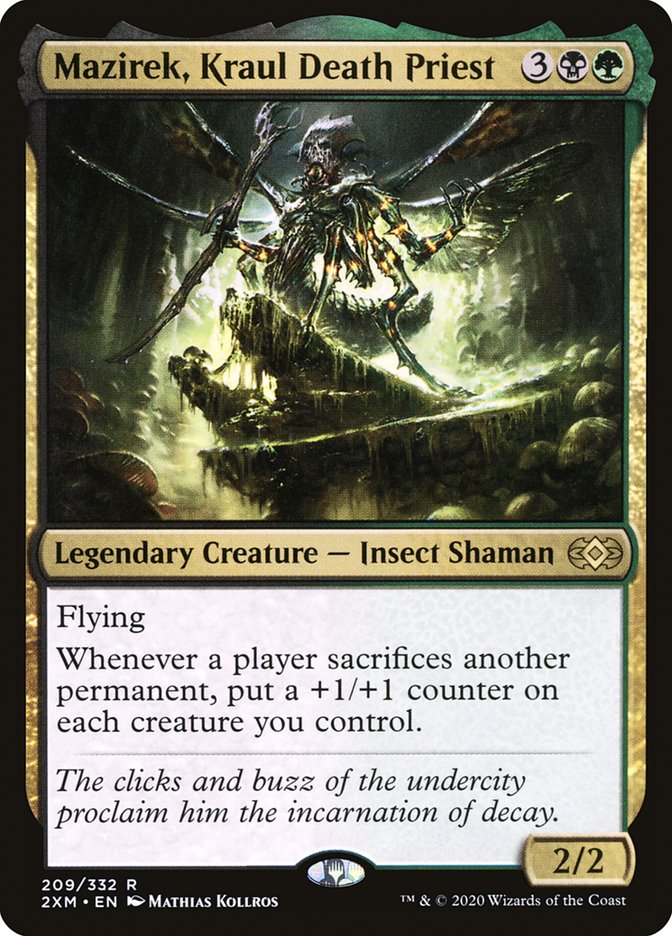
The last variety of Aristocrat Commander are the Spout Engines. These are Commanders that benefit from other creatures being sacrificed in some way. Elenda, the Dusk Rose is one such Commander (foreshadowing) but so is Mazirek, Kraul Death Priest. Mazirek doesn’t take an active role in any part of the Aristocrats engine but benefits from it all the same (and in this case, spreads that benefit far and wide). Juri, Master of the Revue is another Commander in this vein as it likes watching other things die and at the end of their time can potentially take someone out as well.
But what about Elenda? There are a ton of Commanders available that, like Altar of Dementia and Goblin Bombardment, fit multiple roles. Elenda is not only a Fodder Commander but she also is a Spout Engine. Slimefoot, the Stowaway brings friends to the dead man’s party while also serving as a Spout. One of my old favorites, Teysa, Orzhov Scion combines a limited sacrifice outlet with the potential to generate tokens. Each of these have different benefits and reward different play patterns. It’s one reason why my collection tends to have several Aristocrat decks at any one time – even if the mechanics are similar they provide a variety of experiences and make use of different cards to accomplish their goals.
So what is the best Aristocrat Commander? You tell me. Sound off below about which one you think is best. Don’t forget to like comment subscribe. If you like this sort of content and want to see more of it you can sign up for my Patreon and you can tell me why I’m wrong about all of this.
Thank you for watching Treasured Finds, I’ll see you next time we go Gravedigging.
 NerdtotheCore