
Want to learn more about the metrics I use in tracking the metagame? You can find an explainer here.
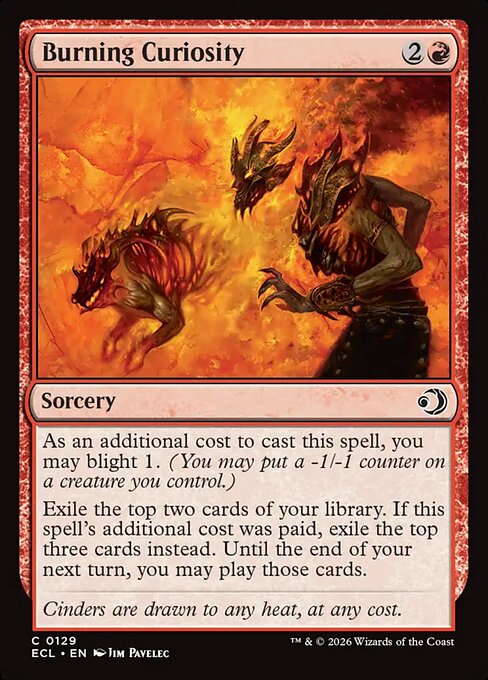
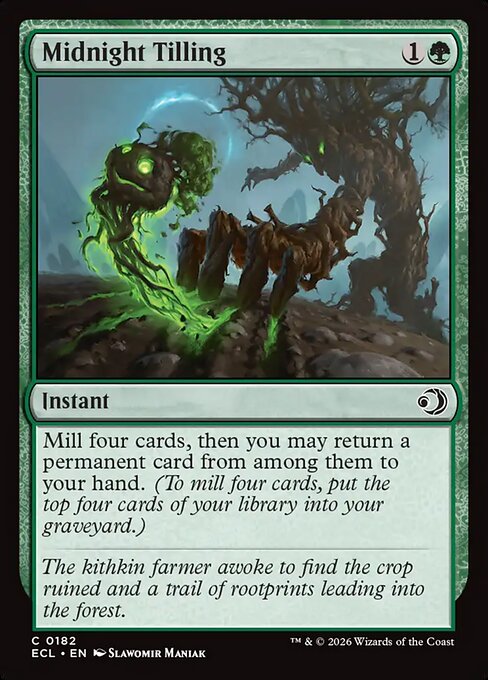
So this is the new year and Pauper doesn’t feel any different. That’s to be expected considering from a non-rotating format. Yet, much like Times Square at noon on January 1st, there is a miasma lingering in the air. The calendar tells us that Lorwyn Eclipsed is right around the corner but the set, at least at first glance, does not seem to have a ton of offerings for Pauper. There are plenty of cards that could fit into existing archetypes and provide an upgrade (Midnight Tilling comes to mind), but the only option that stands out, to me at least, is Burning Curiosity as a powerful draw spell for red based Ritual style combo decks.
This is all a roundabout way of saying that come February Pauper is going to bear more than a passing resemblance to the format as we experience it today. After years of Commander and Modern focused sets sending waves through the metagame, the relative stagnant is all an odd combination welcome and strange.
Stability. What a concept.
Thus we find ourselves at the end of the second month of Avatar: The Last Airbender season. The first four weeks gave us a glimpse of a metagame that had adjusted to the absence of High Tide combo; the last four weeks has helped the metagame image crisp around the edges. The top-line, for me at least, is the point at which a best deck becomes a concern.
The deck in question is Blue Terror. It is not just that the strategy has been consistently at the top of the metagame, but rather the distance it is starting to put between itself and other options. In the second four weeks of Avatar, Blue Terror clocks in at 13.42% of the Winner’s Metagame and has an Adjusted Meta Score Above Replacement of 1.01. These numbers both improve on the first four weeks’ performance of 13.24% and 0.94. Taken in aggregate, Blue Terror is 13.34% of the Winner’s Metagame (around 4.4% ahead of second place in that metric) and has an AMSAR of 1.04 overall, 0.24 points clear of the next best performer. It is not just that Blue Terror has been a good deck, but also that it pulling away from the field.
Is this a problem? That is less clear. One of the biggest shortcomings of my measures is that they are aggregate – that is they take a set period of time and stack the results on top of each other. Blue Terror consistently does well in Magic Online tournaments. It would follow that these finishes, when taken together, would push the Tolarian Terror deck further up the ladder. I do make an effort to adjust for total metagame presence but that can only do so much. From my vantage point Blue Terror is a clear best deck in the format and has started to separate itself in such a way that it is worthy of scrutiny. Whether this additional attention will uncover a problem remains to be seen. Despite it’s strength the deck still averaged a Top 16 finish over the past month with a mean performance behind Madness Burn, Grixis Affinity, and CawGate (albeit those decks did not come close to matching Blue Terror’s 73 appearances in the Top 32).
If Blue Terror were the only deck I had my eye on that would be swell, but alas it is not to be. Sneaky Snacker is having a moment in several decks and the Dimir faerie is doing a lot of work holding up two different burn strategies. Madness Burn and Rakdos Madness combined for 18.57% of the Winner’s Metagame over the past four weeks – more than 5% ahead of Blue Terror. Rakdos Madness finished that span with four wins, an impressive AMSAR of 1.01, and had an average finish better than Blue Terror. Madness Burn lagged behind with an AMSAR of 0.35 but took down the finals twice. Combined these decks had six more victories than Blue Terror over the same span. Sneaky Snacker is less a resilient threat in these builds and more part of a powerful engine, turning the additional cost of cards like Grab the Prize into a free piece of material. Taken separately these decks are not worrisome but when looking at the whole picture they represent something that may require attention. Again this focus is likely to reveal nothing new but that does not mean the performances should be ignored.
There is something else that should be taken into consideration: Pauper is largely balanced. The discourse around the format has an overall positive tone. As someone who has been heavily invested and involved in Pauper for over 20 years (ouch, my knees) it is refreshing to not to have the noise around the game be overwhelmed with complaints. There are still areas for improvement – no format is perfect after all – but overall things are good, which is a nice respite.
Where does all of this leave Pauper heading into Lorwyn Eclipsed? The graveyard continues to be a focal point. Being able to proactively deal with the discard pile grows ever more important. But this can not come at the cost of developing your own board state as falling too far behind can be a recipe for disaster. Thraben Charm remains a key card moving forward but white based aggro and midrange has struggled to consistently break through; Mono White Aggro performs slightly worse than the average Top 32 deck. The lack of high impact cards from the latest set leads me to believe that when we look at the format in February not a whole lot will change.
But I’m ready to be surprised.
Power Rankings
Dropped from rankings: Azorius Familiars
10. Golgari Gardens (-8)
9. Rally Red
8. Spy Walls (Not Ranked)
7. Elves (+3)
6. CawGate (-1)
5. Jund Wildfire (+2)
4. Madness Burn
3. Grixis Affinity
2. Rakdos Madness (+4)
1. Blue Terror
I want to take a moment to thank all my Patrons. I am going to do my level best to keep providing you with the kind of content that brought you here in the first place. If you are interested in supporting my work, you can sign up for my Patreon starting at just $1.
Can’t make a commitment to Patreon? I have a Ko-Fi where you can make a one time contribution.
 NerdtotheCore