
Want to learn more about the metrics I use in tracking the metagame? You can find an explainer here.
Sometimes the data set is confounding. Last weekend is a perfect example. The September 20-22 set of Challenges were the first to take place under the new payout system introduced by Daybreak. While the Saturday and Sunday events largely held true to their former attendance numbers, the Friday tournament barely crossed the starting threshold. The result was a Top 32 where several 1-X players “cashed”.
In the grand scheme of things – that is when I write my season recap – this one tournament will not have as large an impact on the information. But here it can have an outsized effect. The records serve to drag the worse decks down and make the strategies at the top of the standings seem slightly better than they may have been in actuality. Please keep that in mind when we examine the results.
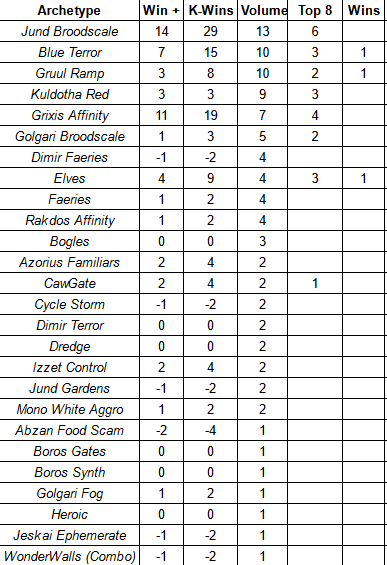
Jund Broodscale was the best deck on the weekend. A baker’s dozen total Top 32 appearances with a nearly 50% conversion rate to the Top 8. The three color combo build amassed an Adjusted Meta Score Above Replacement of 1.43, clearing the next best strategy (Grixis Affinity) by over a third of a point. Broodscale Combo decks have asserted themselves as a healthy part of the metagame, giving players a way to go over the top while not dominating the format.
I want to take a moment to call out just how important a development this is in the Pauper metagame. While Broodscale might not appeal to a certain stripe of combo gamer – those that prefer casting spells to getting the job done with creatures – it does seek to win the game through an unbound loop. While other creature based combo decks have had their moment in the sun, including WonderWalls and Goblin Combo, Broodscale is resilient enough to put up consistent results while being vulnerable enough to not overtake the metagame. This is a delicate line to walk from a format management perspective as pushing too hard in either direction can cause a lot of trouble. Personally speaking it is refreshing to see a deck of this nature put up consistent results without crowding out other strategies.
The rise in Broodscale combo has given blue decks another shot in the arm. Removal can be effective if timed correctly but drawing the wrong piece of interaction against the combo deck can prove problematic. Counterspell has no such restrictions on what it hits and decks that can reasonably cast the spell have an edge in the current format. This can been seen in the sustained success of Blue Terror but also in the slim meta share of both Azorius Familiars and CawGate. These decks were well set up to use counters as a way to defend their plan in the late game, buying important time to turn the corner. This angle does not work as well when you are facing down a potential lethal lizard on turn three or four. Here a more proactive use of counter magic is applicable, which helps to explain the surge in blue decks Terrorizing the tables. A 0.44 aMSAR places Blue Terror third (behind Grixis Affinity) over the weekend with a health three Top 8s, including a win.
Where does this leave things going into Duskmourn? It is hard to say. The set is packed with interesting cards that might take some time to figure out. Early on, however, I would absolutely be focused on having a plan for Kuldotha Red. Clockwork Percussionist is another aggressive one drop that fits neatly into the strategy while also providing some card flow. Being able to feed the Monkey to a Kuldotha Rebirth to end up card neutral is a pretty big game, especially after it pecks in for a few points of damage. This is nothing new, of course, as assertive decks always have a leg up early.
Emerge from the Cocoon is not a traditional reanimation spell as you’re not going to be getting a steep discount. If, however, you can figure out a way to cast this ahead of curve, whether it is with a mana dork or other means, and get a large threat into play the extra three life could make up for how ponderous the card plays out. The problem, as always, is Pauper is full of Baneslayers (that is, stat monsters) and lacks Titans (big creatures that generate value). Is getting Avenging Hunter back from the graveyard better than casting it? I feel like we are going to find out in the first few weeks of the next season.
I wanted to take a moment to address something I made public yesterday. Due to a shift in content strategy, October will be my final month writing for ChannelFireball. It has been an amazing honor and privilege to write for CFB and I am grateful for the opportunity. I plan on continuing to write on this page, but the loss of my gig at CFB does represent a decent hit. If you have enjoyed my content over the years and would like to support my writing moving forward, please consider becoming a member through Patreon. Thank you for your consideration – I love being able to share my writing with folks and want to do it for as long as I have something to say.
I want to take a moment to thank all my Patrons. I am going to do my level best to keep providing you with the kind of content that brought you here in the first place. If you are interested in supporting my work, you can sign up for my Patreon starting at just $1.
Can’t make a commitment to Patreon? I have a Ko-Fi where you can make a one time contribution.
Looking for another way to support my work? Click here for my TCGPlayer affiliate link. Any purchases through the link let the folks there know you like my content!
 NerdtotheCore